Creating Emergence
The Idea
Emergence began as a single question:
What does transformation look like when it refuses to be quiet?
This piece came to me during a time when I was trying to push myself beyond what felt comfortable. After finishing Flora & Fawn, I knew the next work needed to dig deeper, not just into technique, but into meaning. I didn’t want to simply paint another peaceful scene. I wanted something that felt alive, something that carried weight.
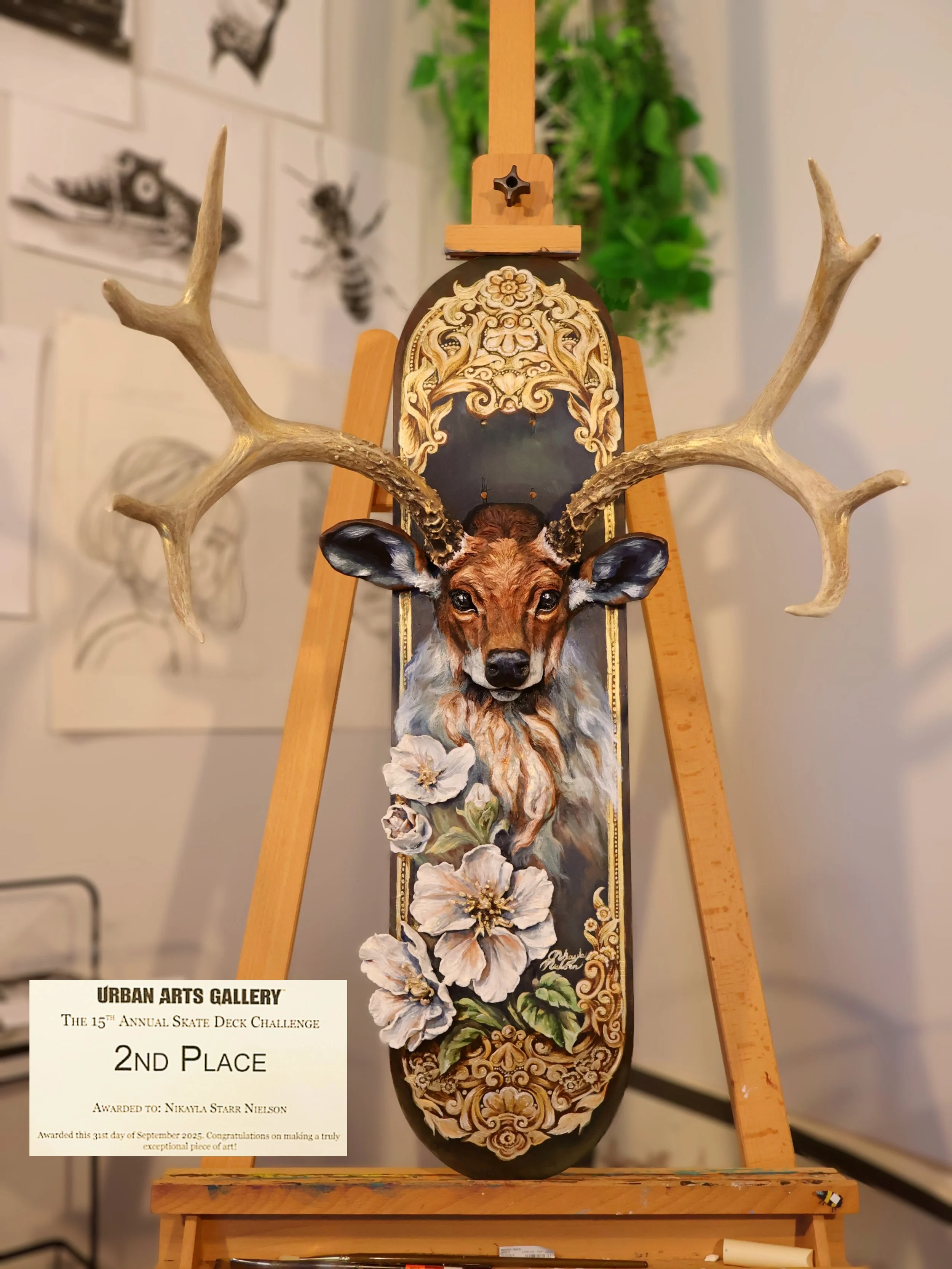
The idea of a deer emerging from layers of florals and ornate gilded framing felt symbolic of what I was going through stepping into my new artistic identity with more confidence, even if the process felt messy and unfamiliar. The antlers became a metaphor for growth: branching, reaching, expanding in unexpected directions.
Where Flora & Fawn represented new beginnings, Emergence became about becoming. About showing up boldly, even if the shape of who you’re becoming still feels in progress.
That’s why this piece is so important to me. It pushed me harder than anything I’ve created before — technically, emotionally, and creatively. It challenged me to stop hiding behind what felt “safe” and embrace the raw, imperfect, layered parts of my work that make it mine.
The Process
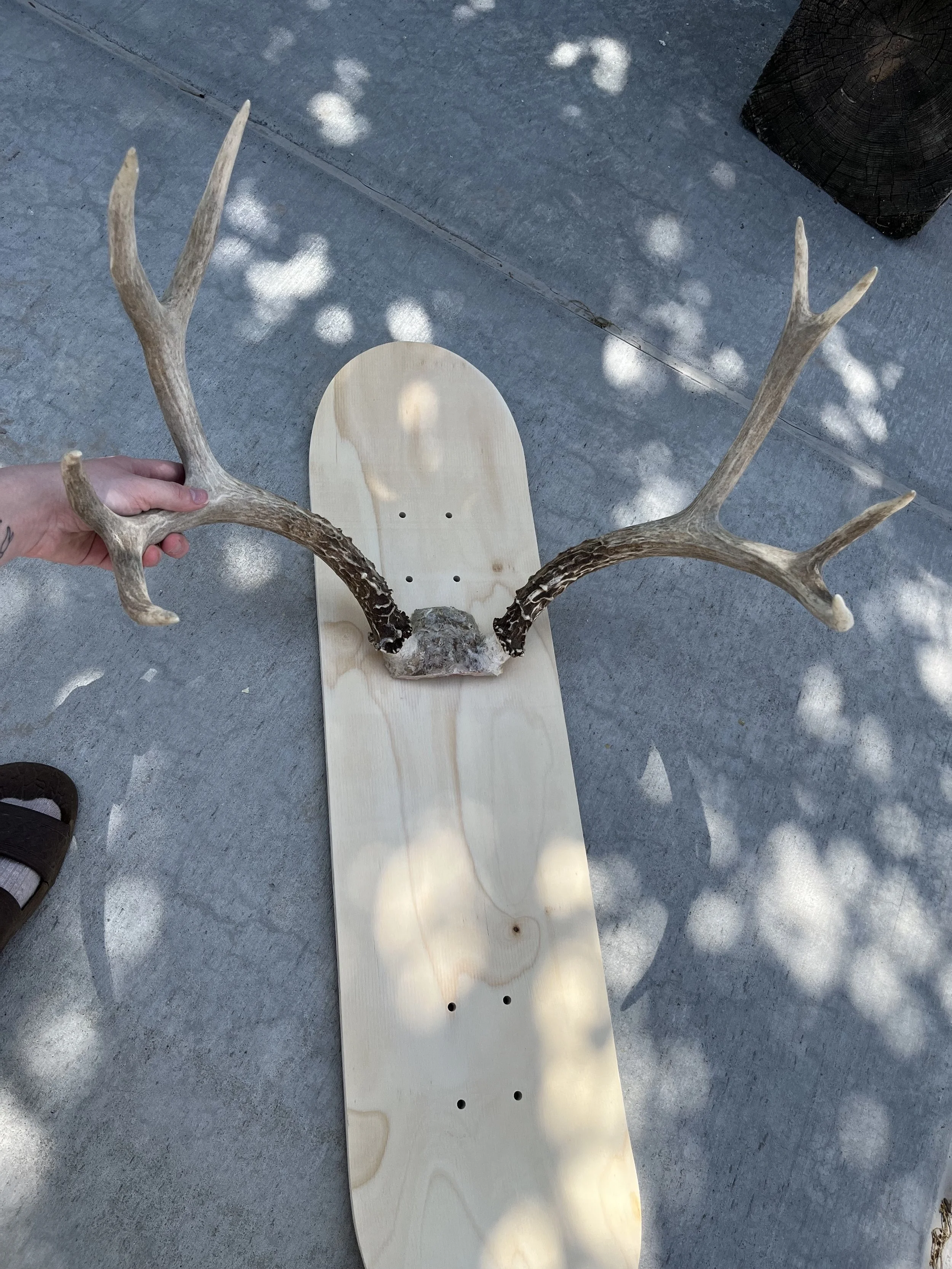
Like all my pieces, Emergence began with gathering references, sketches, florals, deer anatomy, textures, and gilded ornamental details. I wanted harmony between realism and something more otherworldly. Something that felt grounded and familiar, but also slightly surreal. Most important of all, the antlers. This set was kindly gifted to me by my grandparents. I myself am not personally into hunting or hunting culture. However, I do strongly believe that if that is something you are going to participate in, you should honor every part of that. So when this idea came up and the opportunity arose I thought it would be so special to give these antlers a second life as an art piece.
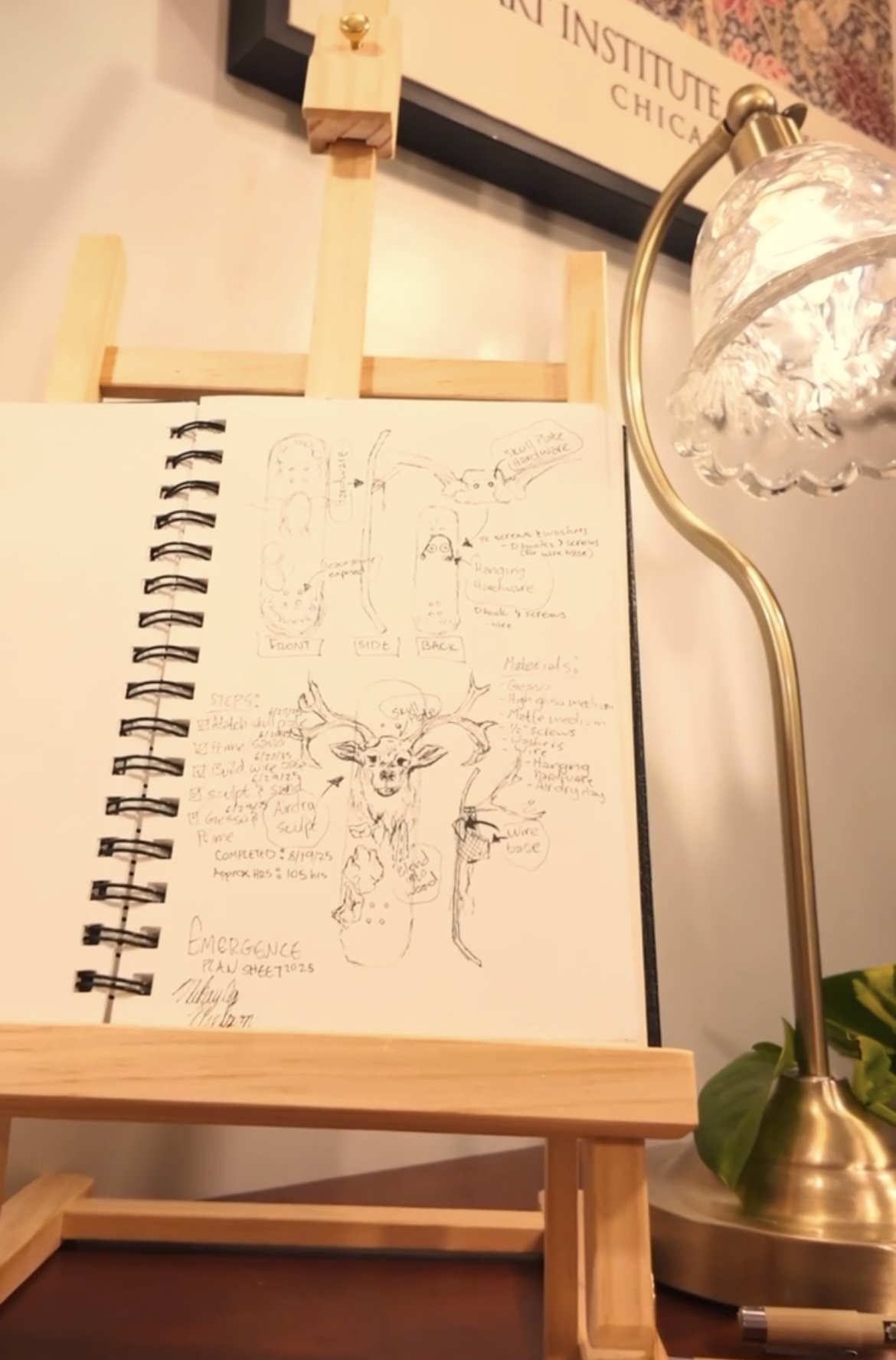
To build the composition, I created a digital mockup using multiple reference photos. Some of those images made it into the final artwork, others served as quiet guides I returned to while working. That’s the beauty of using references without becoming confined by them, the piece evolves into something that stands on its own.
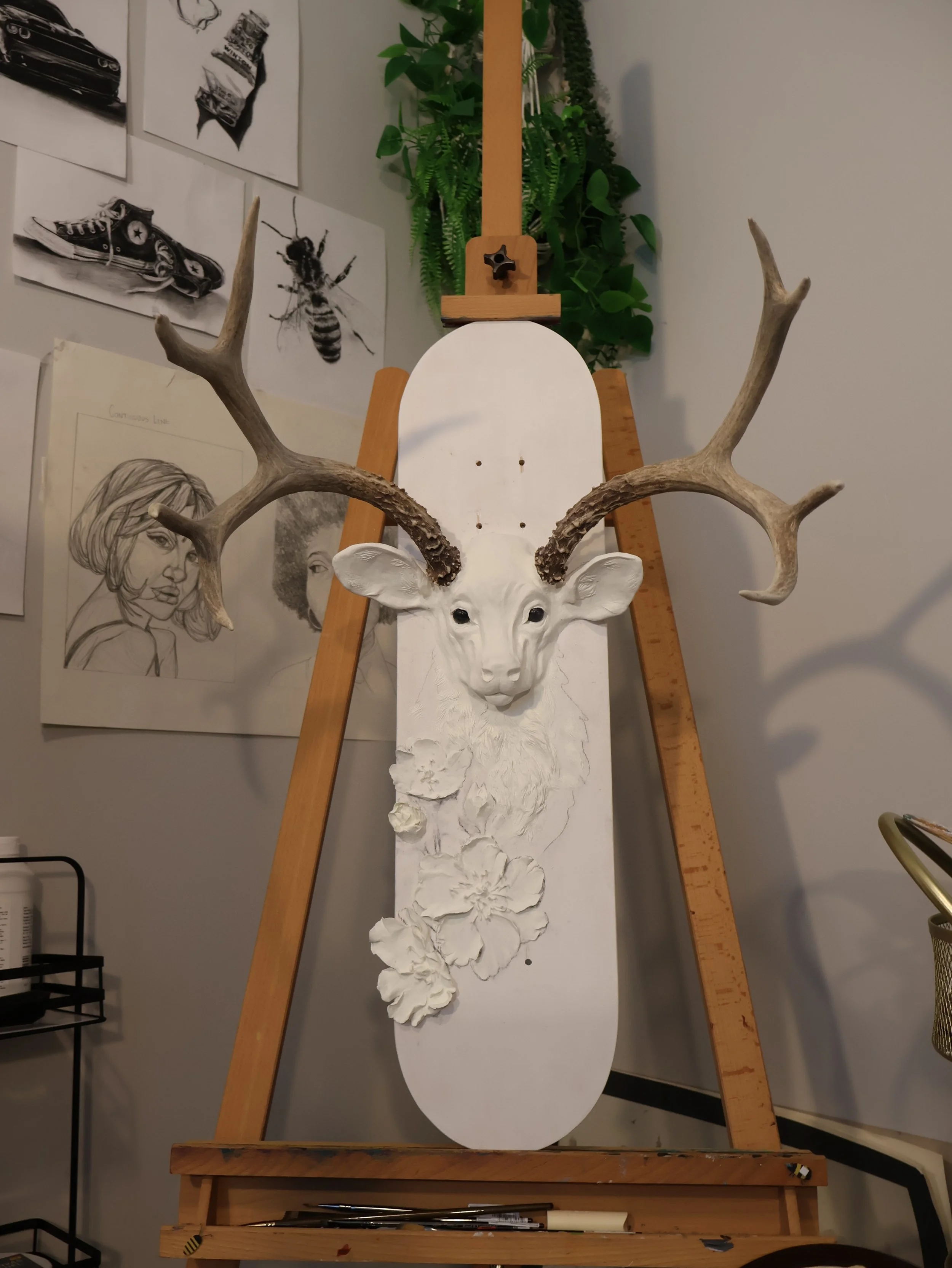
Once the reference was finalized, I used a projector to transfer the initial sketch onto the blank skate deck panel. From there, the structural work began.
Before any paint touched the surface, I had to figure out how to physically build the piece. The antlers and skull plate needed to be mounted securely into the board, a challenge that required some problem solving. Finding a way to anchor them into the skateboard while keeping everything balanced and visually cohesive became its own creative puzzle. Once the armature was stable, I moved on to the sculptural elements.
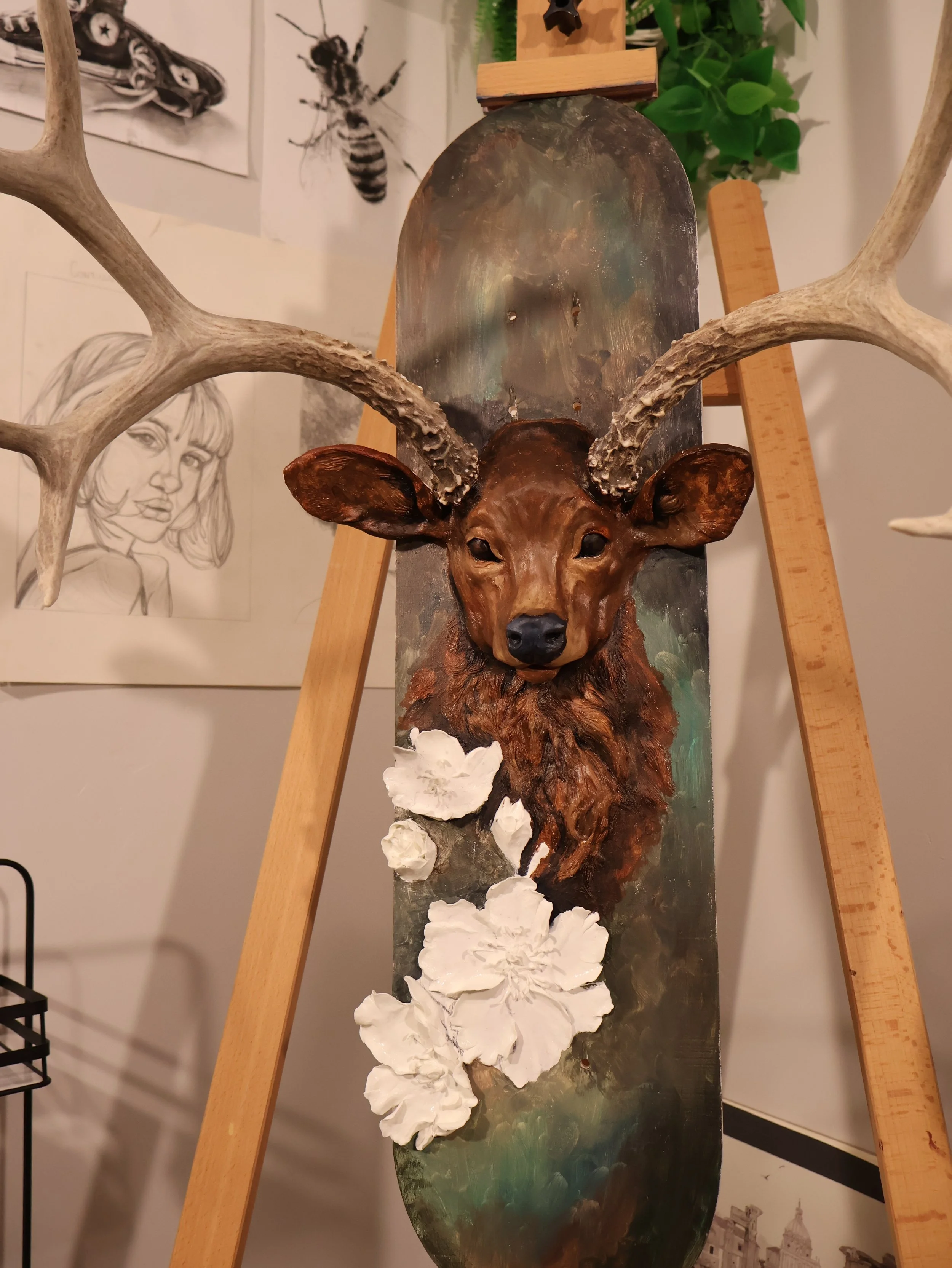
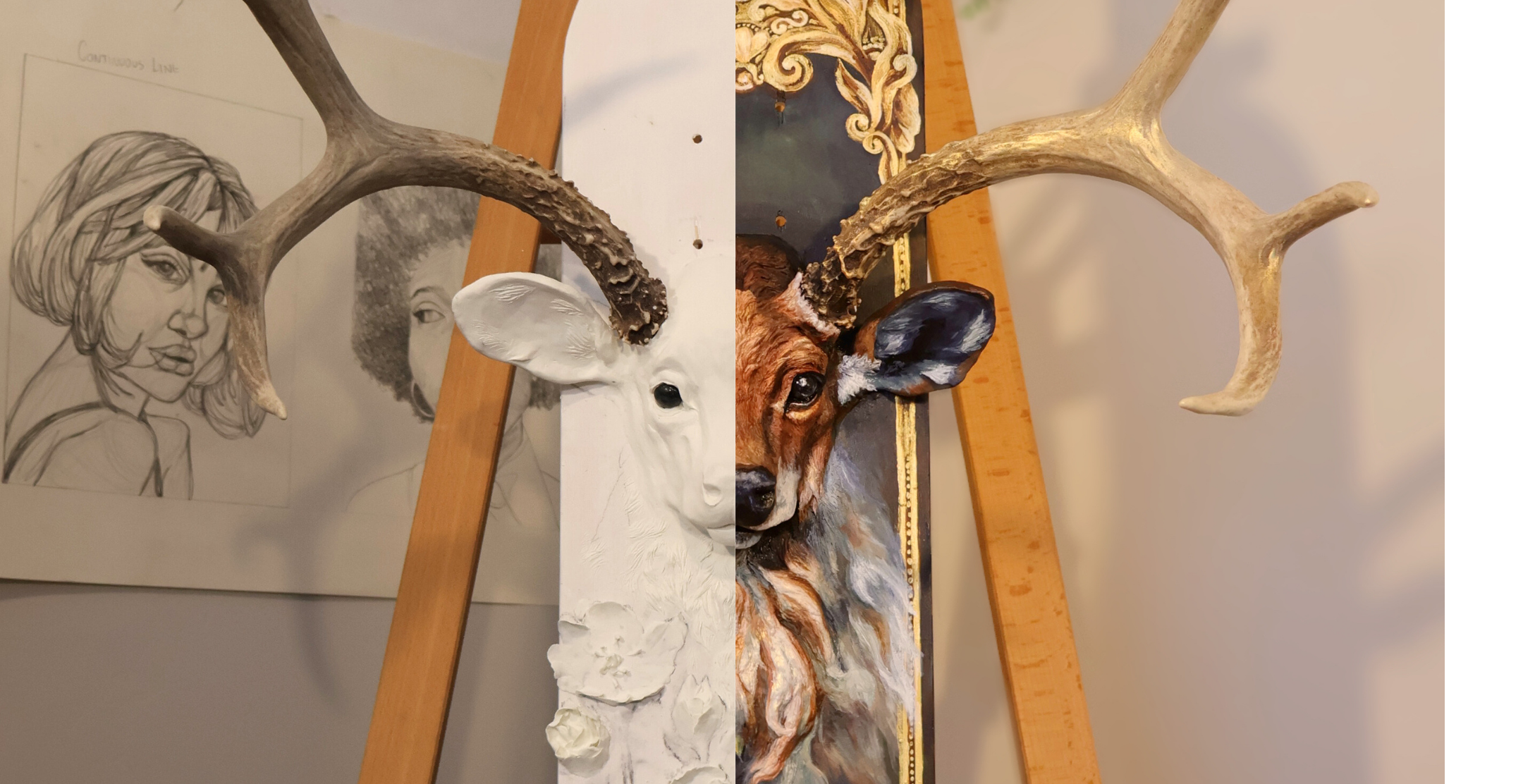
The air-dry clay details were built slowly, layer by layer. Sculpting first allowed me to establish the dimensional framework the painting would later enhance. It was a careful process of shaping, refining, and waiting for each area to dry before moving forward.
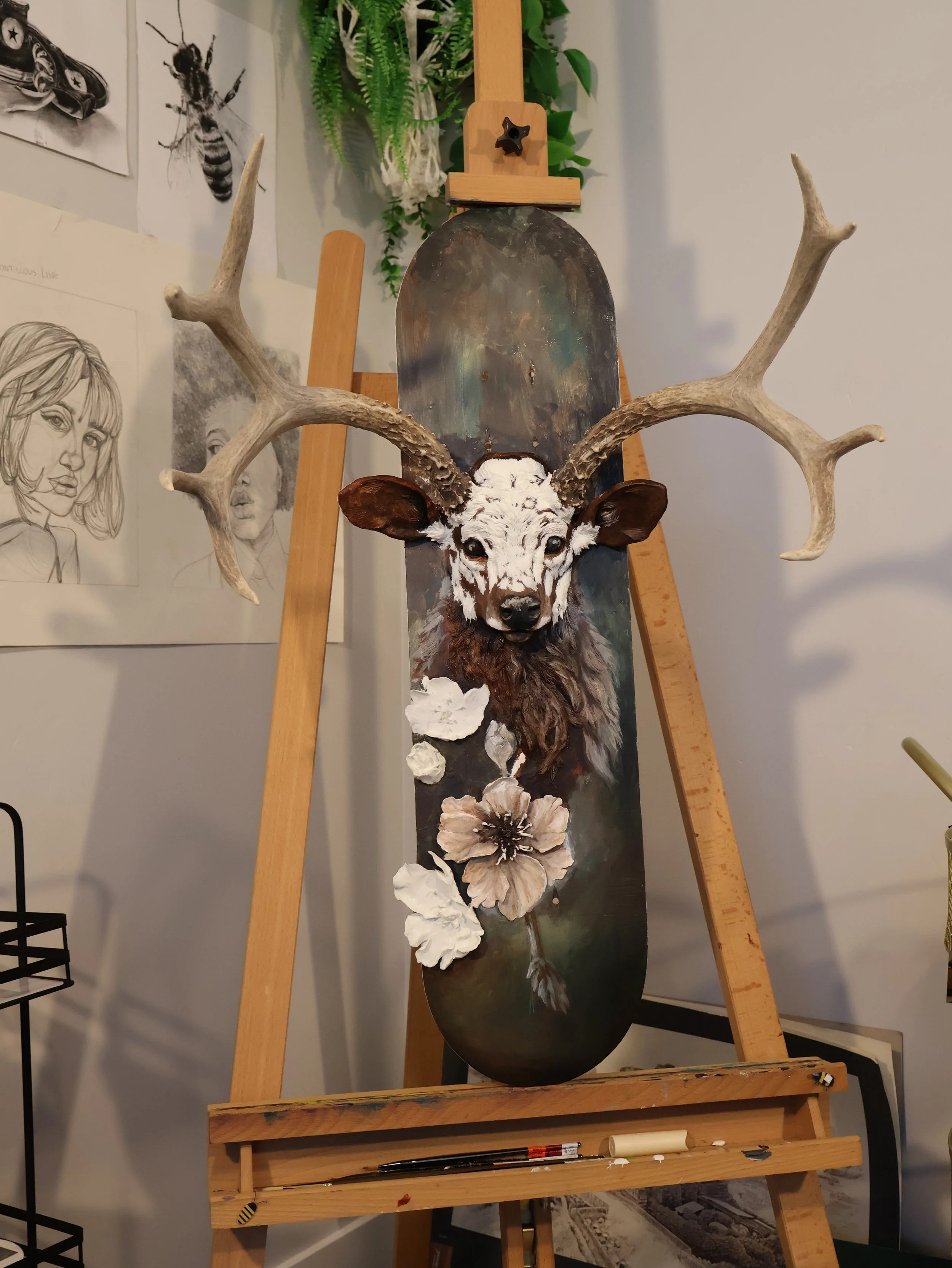
After the structure was complete, I began painting. Emergence was my most complex layering process so far. I started by blocking in large shapes of value to capture the energy and mood. Working background to foreground allowed me to establish the dramatic contrast the piece needed, that deep, moody backdrop against the luminous florals and the expressive gaze of the deer. That was, until I decided something wasn’t working. I then made the decision to get the clay back out and add a couple more layers to really emphasize texture in the fur instead of relying on the paint to create that depth.
As always, foliage challenged me. The flowers required the same softness and atmospheric glow I explored in Flora & Fawn, but Emergence demanded even more refinement. At first I struggled with getting the paint to be as smooth and blended as I would have liked because of all of the tight areas and fragile pieces. Then as the process went on I found that balance of blending the paint while also allowing for the texture to show, especially because I really wanted this art piece to feel like a painting coming to life. I then focused on letting the petals feel worn, delicate, almost memory like imperfect in a way that makes them feel unique and alive.
To tie everything together, I preserved the chipped and distressed wood of the board because I didn’t want to “fix it”. I wanted to allow the imperfections to become a part of the art piece themselves. The ornate gilded designs, paired with the deer and florals, created the blend of classic, surreal, and painterly realism that I’ve been striving to refine. In the end though, this became a project that allowed me to explore and experiment with other mediums that I have never had the opportunity to work with before. I am really so happy about how it turned out and thrilled about the new techniques I learned along the way for future sculpture like projects.