Creating Flora & Fawn
The Idea
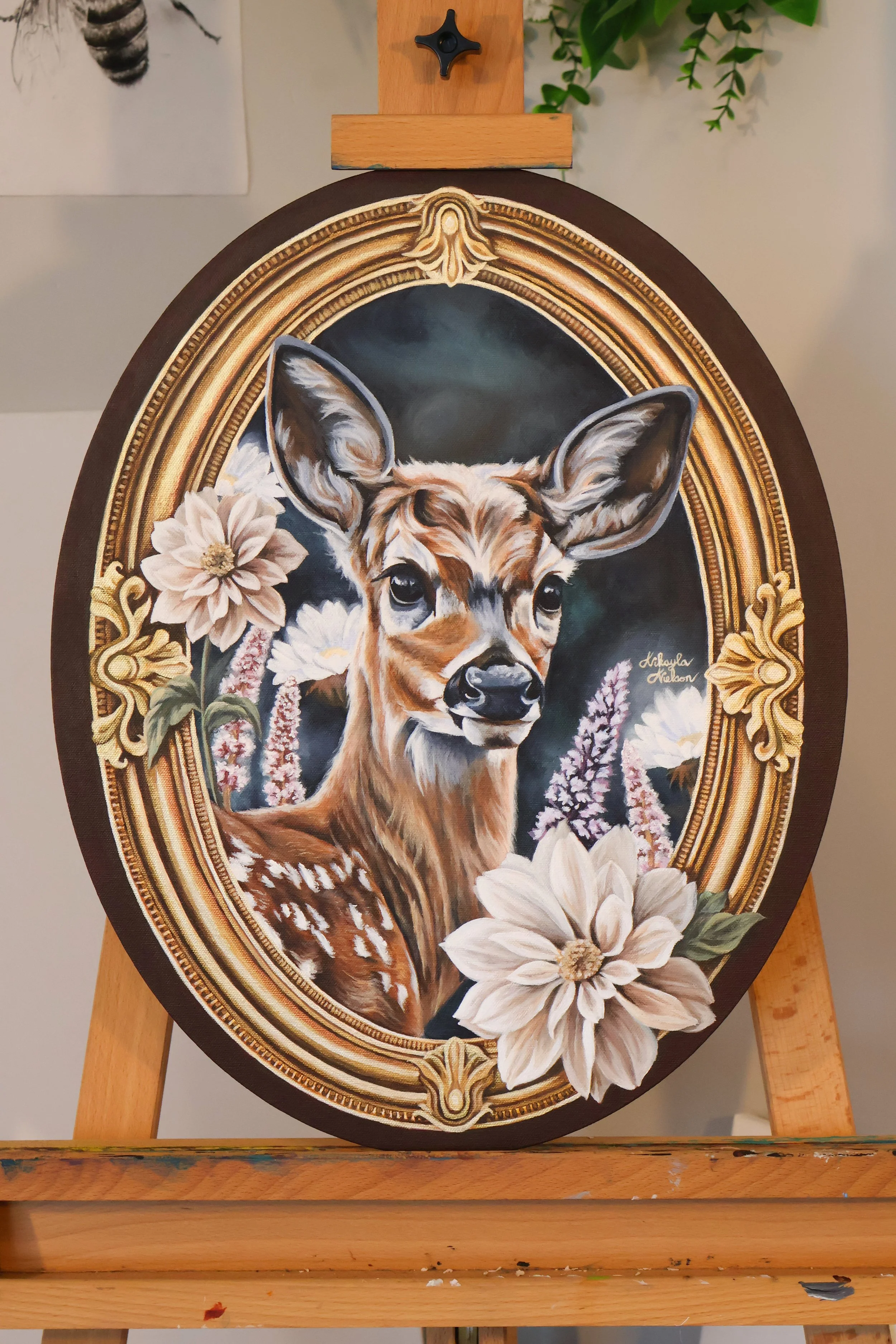
Flora & Fawn was the first piece in this collection, and I knew it had to set the tone for everything that followed. No pressure, right? It took time to land on the main subject, but when the idea of a fawn came to me, it felt right. Fawns symbolize new beginnings and that’s exactly what this piece came to represent for me.
I’ve always been creating, but for a long time I struggled to find a style that felt like mine. I tried realism, surrealism, even digital art, searching for something that fit. I enjoyed all of it, but it still felt like it wasn't quite right for me. That was, until I took a step back for a couple years and allowed myself to reset. This painting became the turning point the moment I stopped chasing a style and started painting from instinct. I knew this piece wasn’t just setting the tone for this collection but also who I am now as an artist and what I want to work towards as I develop my skills further.
That’s why Flora & Fawn holds such a special place in my heart. It was the beginning of finding my voice again quiet, moody, nostalgic. A reflection of how I see the world and how I want others to feel when they view the work. As if they are stepping into that world.
The Process
It all begins with an idea. Every painting starts with a spark, a memory, an image, or a quiet feeling that lingers long enough to take root. From there, I begin gathering inspiration: fragments of nature I’ve photographed, textures I’m drawn to, lighting references, and colors that capture the emotion I want to translate to canvas.
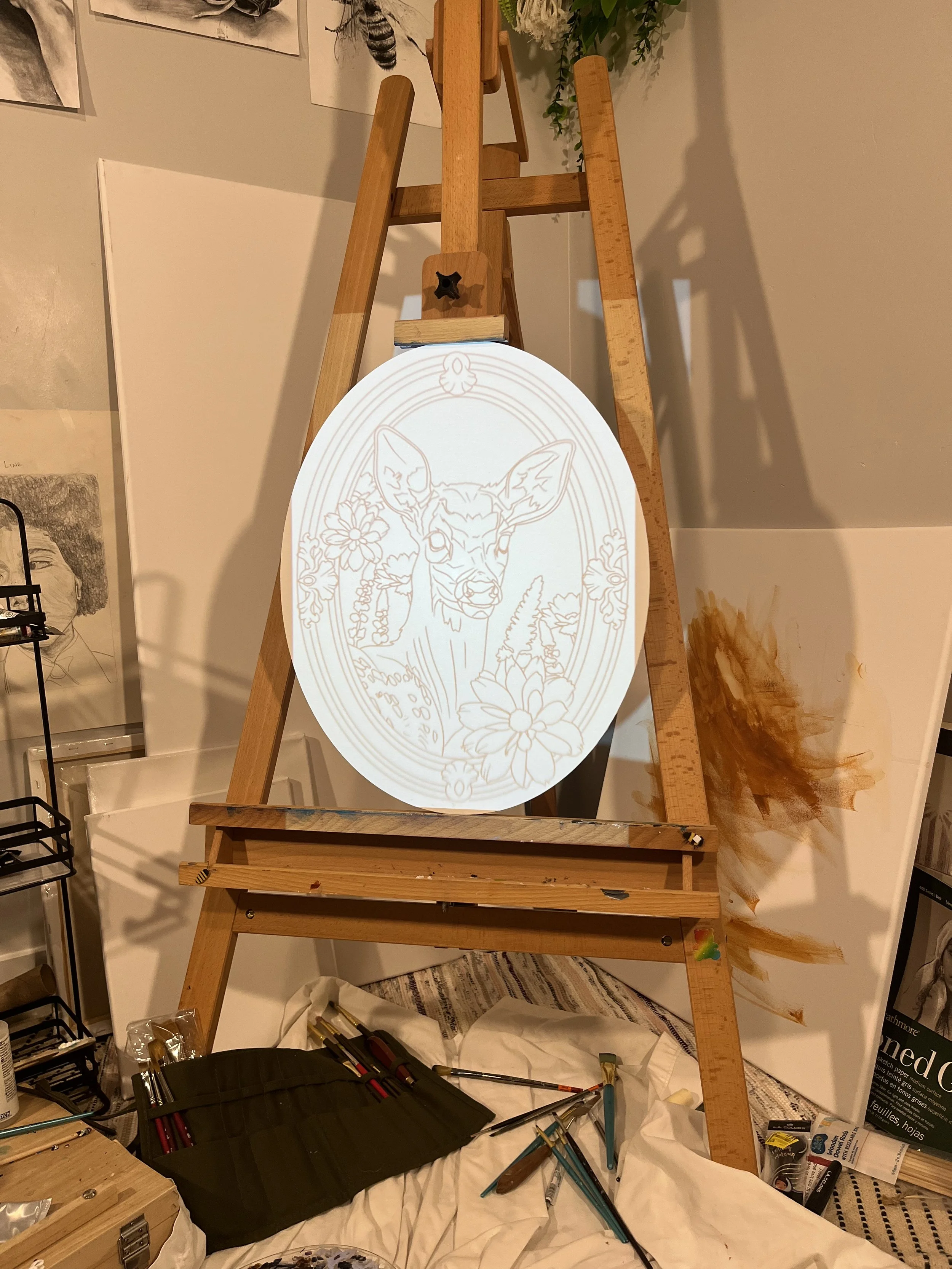
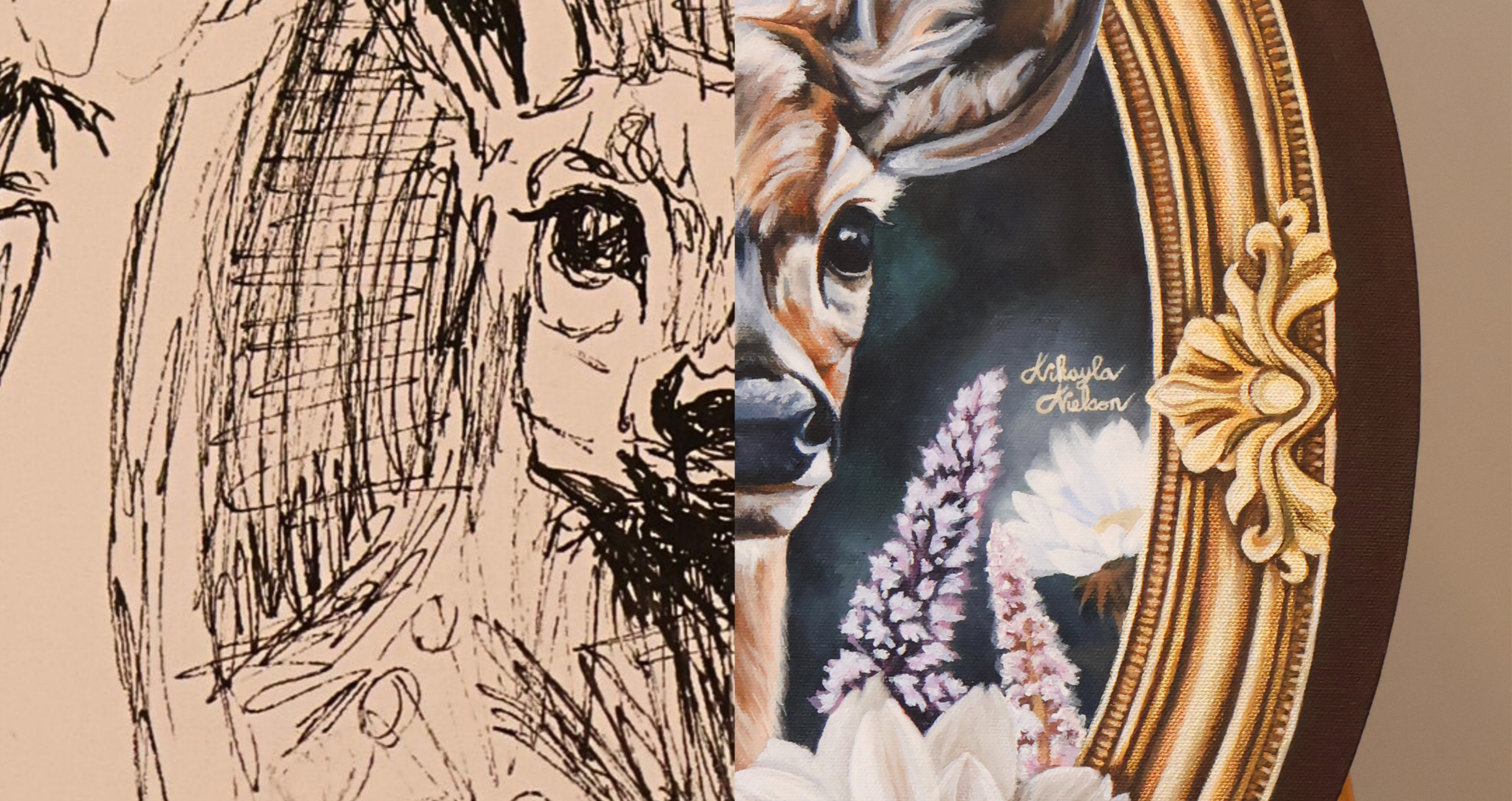
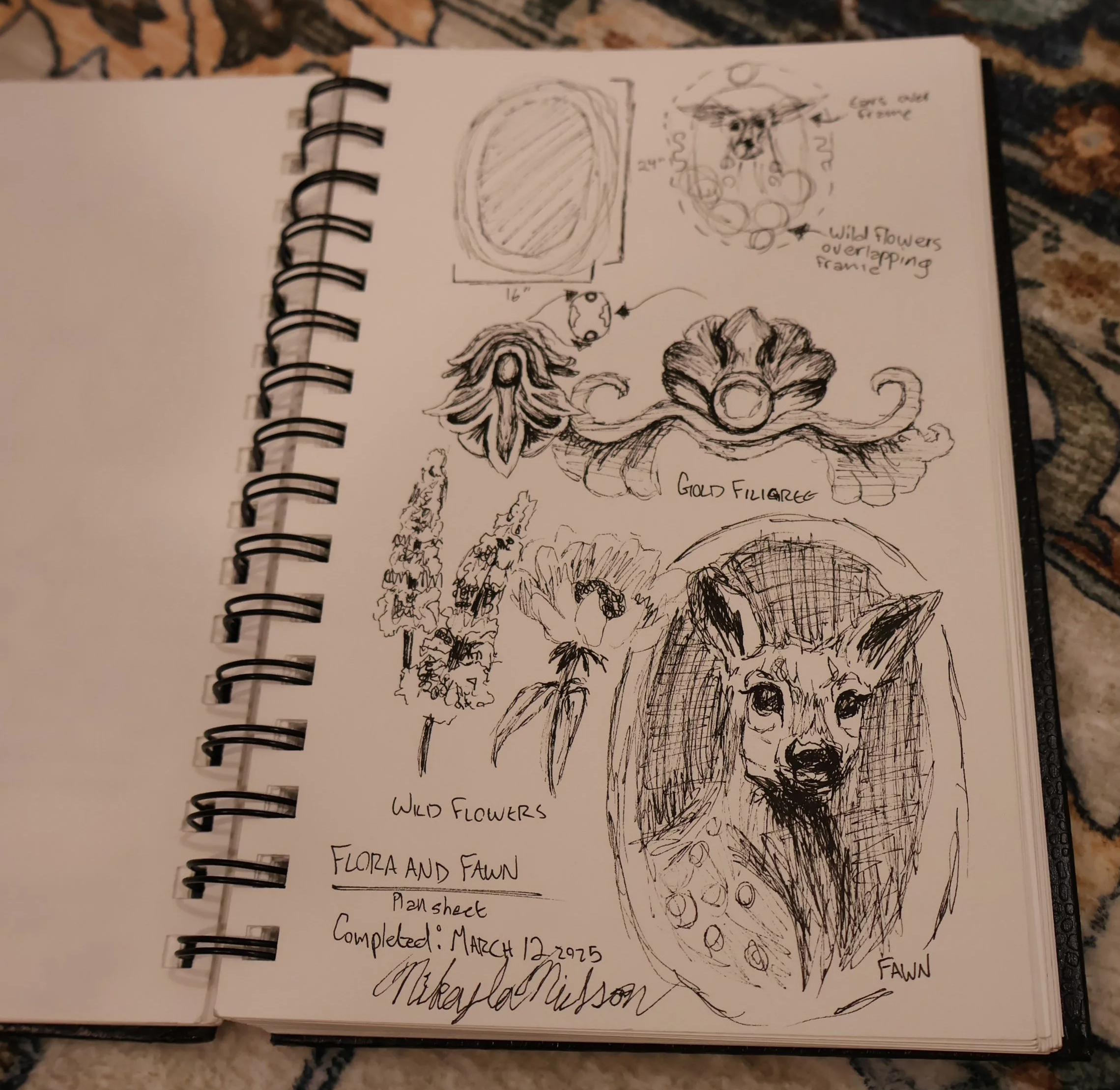
I’m a big believer in working from reference photos, but I never want my process to feel rigid. I aim to find the balance between realism and intuition. To start with structure and then let instinct guide me. I usually build a digital composite from the references I collect, creating a foundation to paint from while leaving room for spontaneity once the piece comes to life. Once I am ready, I use a projector to transfer my sketch to canvas.
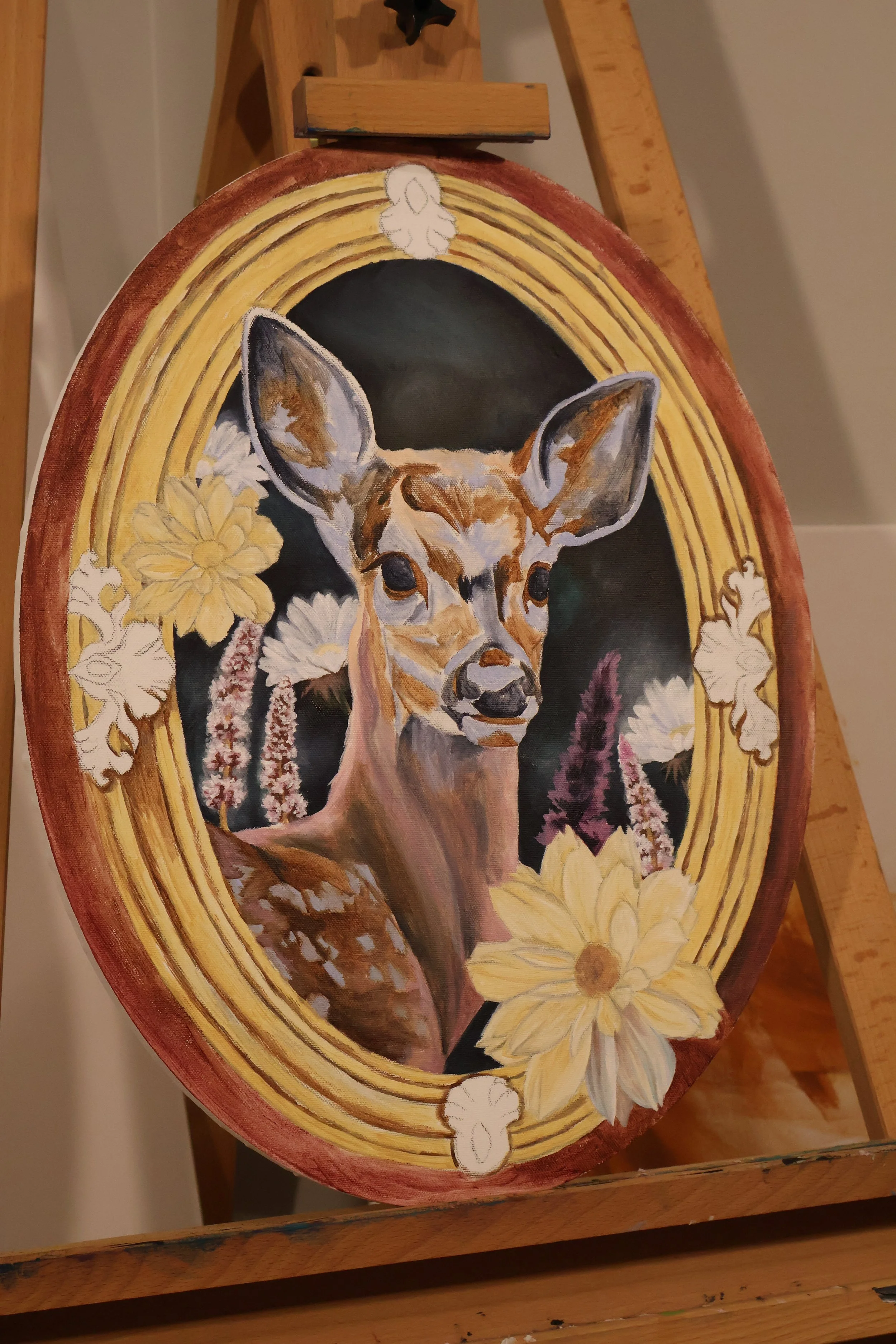
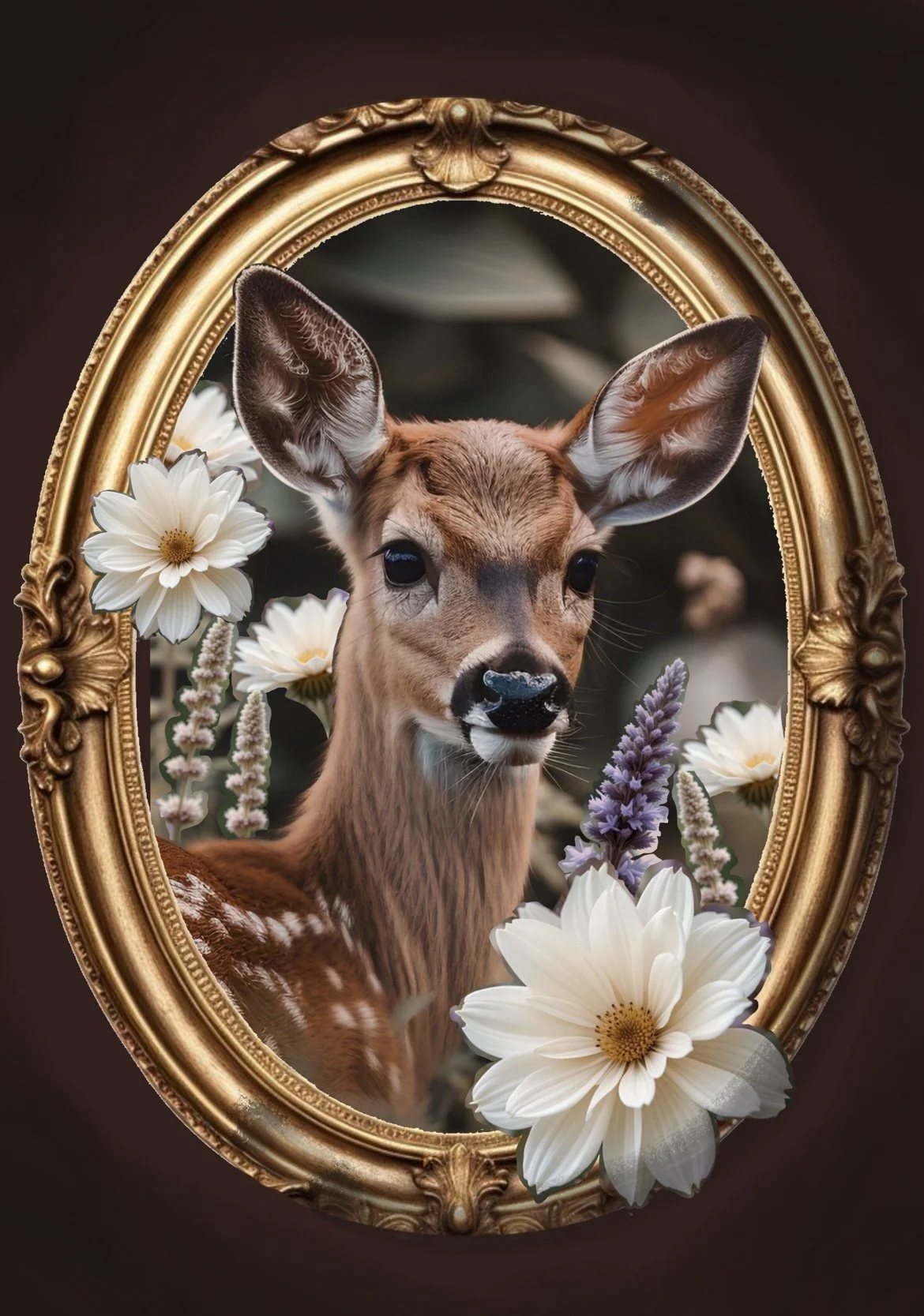
For Flora & Fawn, I began by blocking in large shapes of color to map out value and composition. Starting loose helps me feel the energy of the piece before getting lost in the details. As I moved forward, I worked from background to foreground, layering color and adjusting as I went to create a sense of depth and warmth.
Foliage has never been my strongest suit, and this painting challenged me to slow down to really observe how the flowers feel rather than how they look, how light filters through them, and how those imperfections make nature feel alive. I focused on keeping the foliage soft and atmospheric rather than perfect. My goal wasn’t strict realism, but something closer to emotional realism: a scene that feels like a memory rather than a photograph.
I experimented with subtle aging effects throughout the painting, letting warmth fade into the edges like an old photograph. That touch of imperfection, the quiet glow and softness became something I wanted to carry forward into the rest of the series. This is also the piece that helped me decide on a key consistent element to my work, the frame. By allowing the subject to go beyond the frame it invites the viewer in further. Creating the perfect blend of the surrealism style I had before experimented with and the new realistic painterly style I have been loving lately.